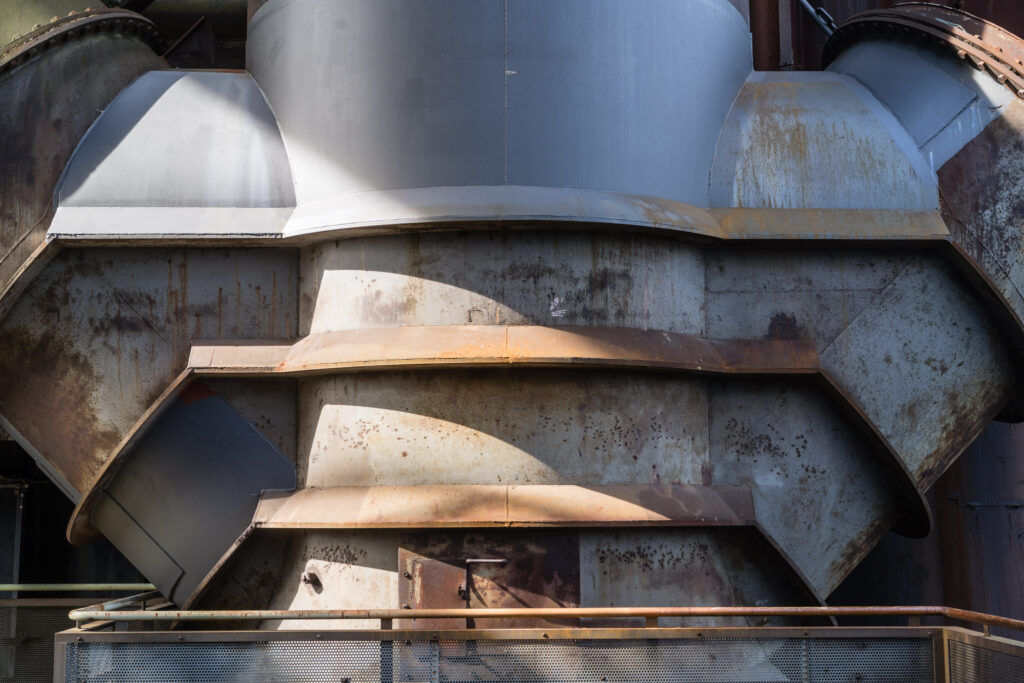
Jubiläum des Dellbrückentags am 15. Mai. Waldspaziergang mit allen Sinnen und viel Kultur.
Die komplette Serie hier: Gallery > Photography > Köln > Dellbrückentag 2026
Continue reading
Jubiläum des Dellbrückentags am 15. Mai. Waldspaziergang mit allen Sinnen und viel Kultur.
Die komplette Serie hier: Gallery > Photography > Köln > Dellbrückentag 2026
Continue reading
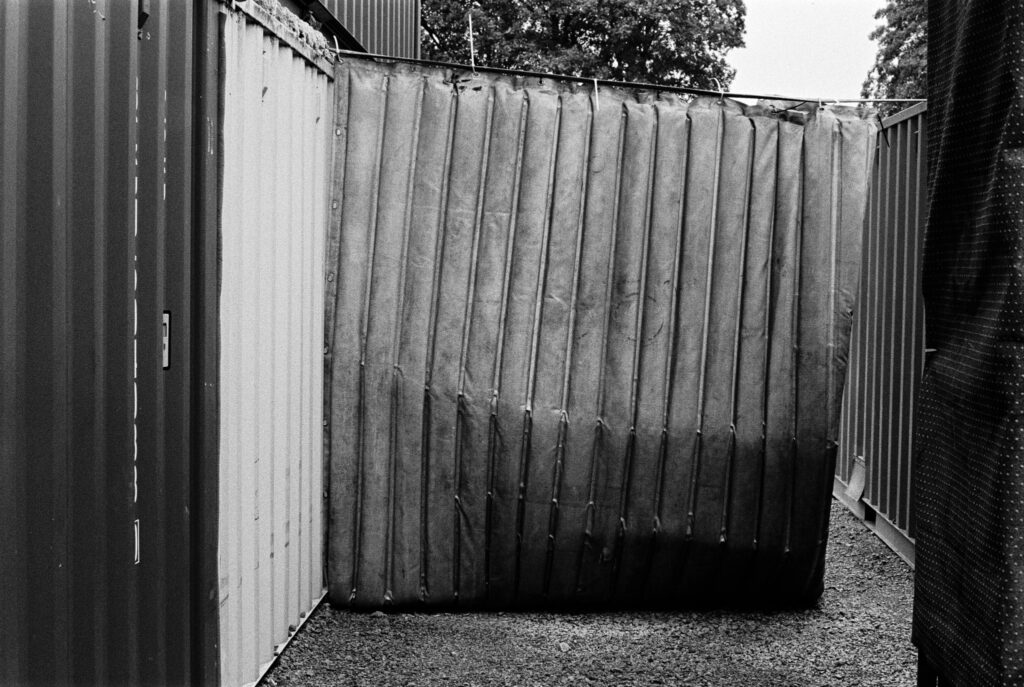
Und Action! Am 18. Mai kam richtig Betriebsamkeit in der Baustelle, im Halbstundentakt wurden per Lkw jeweils zwei Büro- bzw. TEU-Container angeliefert und als Besucher-“Zentrum”, Bürotrakt und Schallschutz rund um den Bohrplatz verbaut.
Die komplette Serie ist hier zu finden: Gallery > Photography > Köln > Forschungsbohrung Dellbrück
Alle Fotografien mit freundlicher Genehmigung durch den Geologischen Dienst NRW.
Continue reading
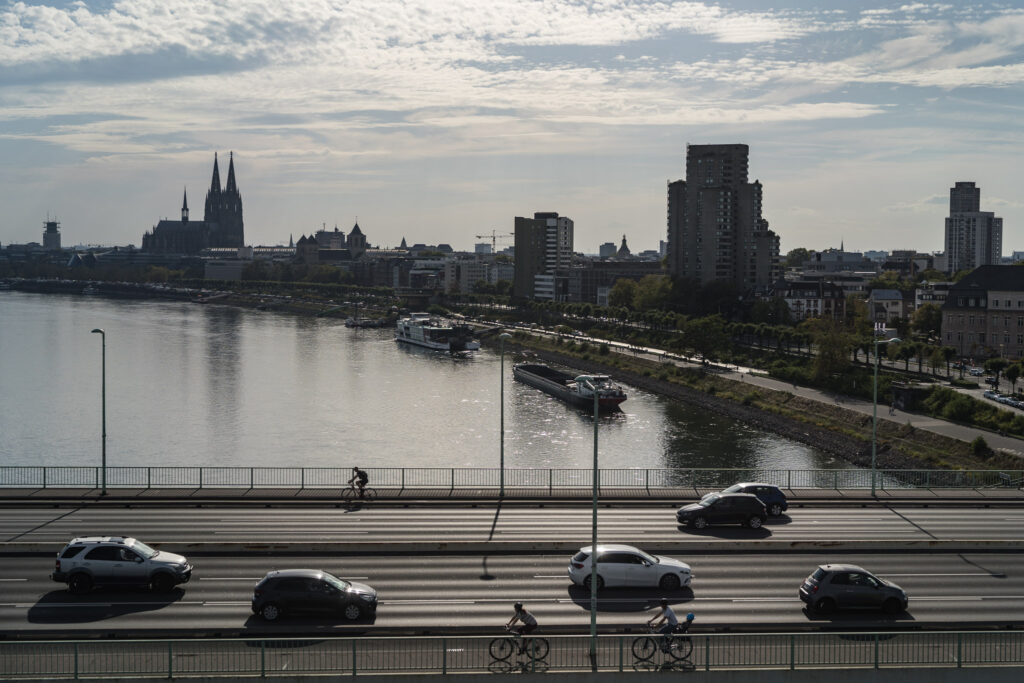
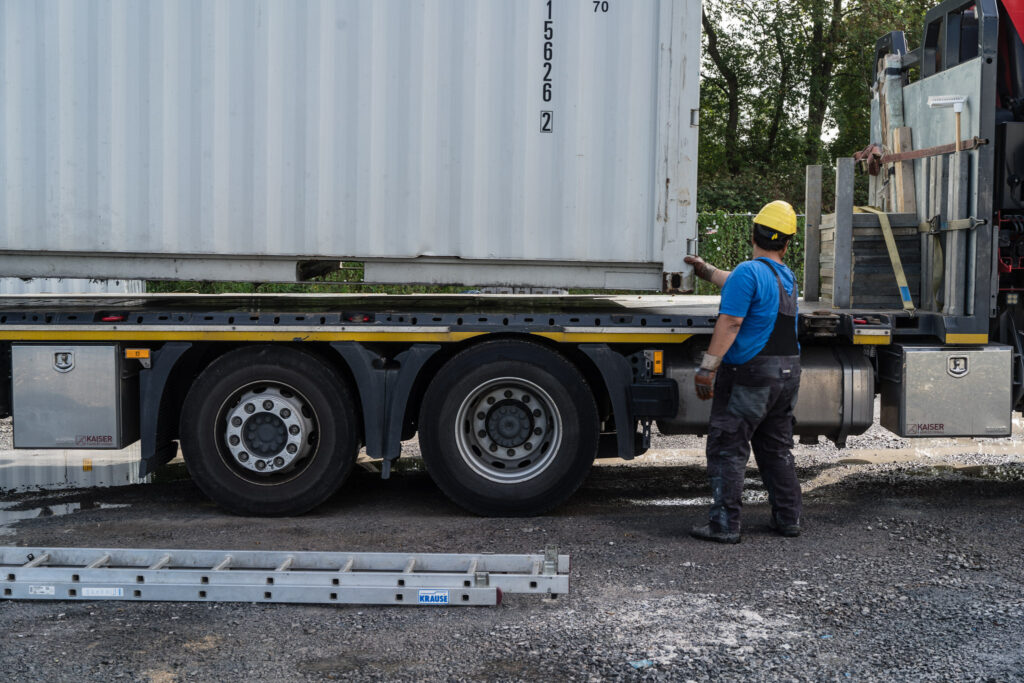
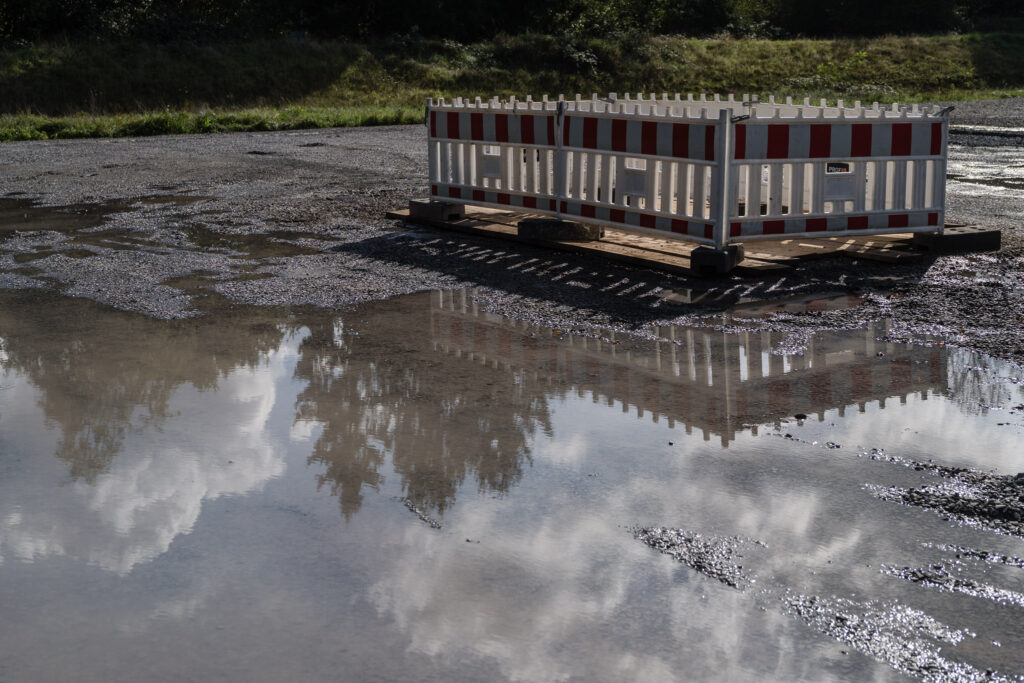
Etwas weniger spektakulär ging es in den folgenden Tagen weiter, die Betonfundamente für das Bohrgerät wurden gegossen, der Bereich um den Bohrkeller weiter aufgeschottert und die Container mit dem Material für die Auffangsbecken aufgestellt.
Die komplette Serie ist hier zu finden: Gallery > Photography > Köln > Forschungsbohrung Dellbrück
Alle Fotografien mit freundlicher Genehmigung durch den Geologischen Dienst NRW.
Continue reading
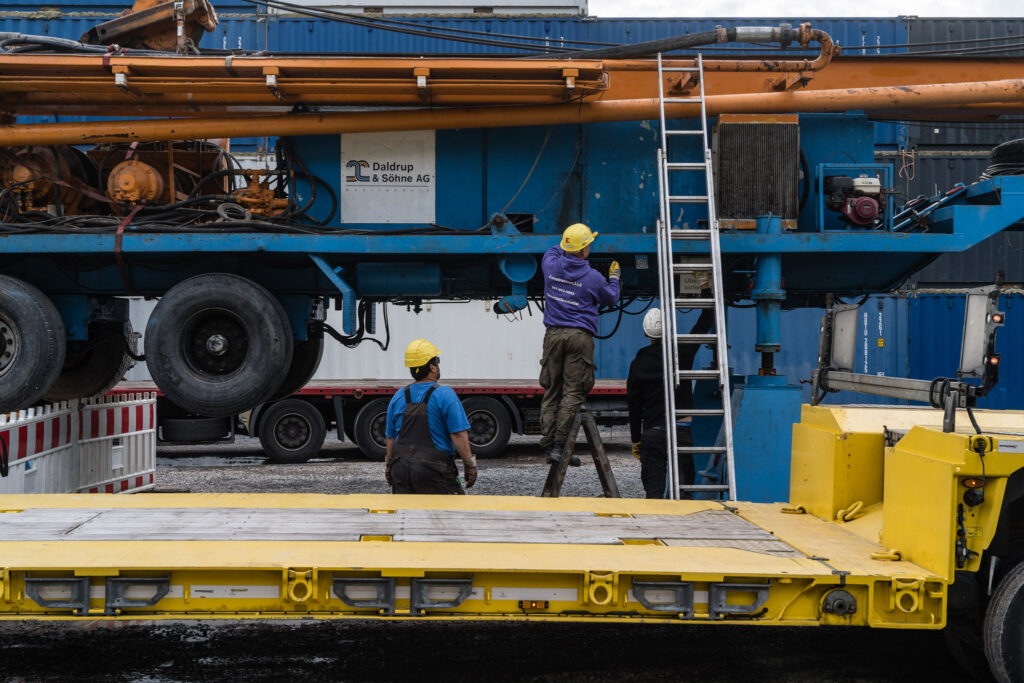
Richtig spannend wurde es am 6. Mai. Das 15 Tonnen schwere Fertigbetonteil für den Bohrkeller wurde angeliefert und mit einem Spezialkran zentimetergenau in die vorbereitete Baugruppe um das Standrohr eingesetzt.
Die komplette Serie ist hier zu finden: Gallery > Photography > Köln > Forschungsbohrung Dellbrück
Alle Fotografien mit freundlicher Genehmigung durch den Geologischen Dienst NRW.
Continue reading
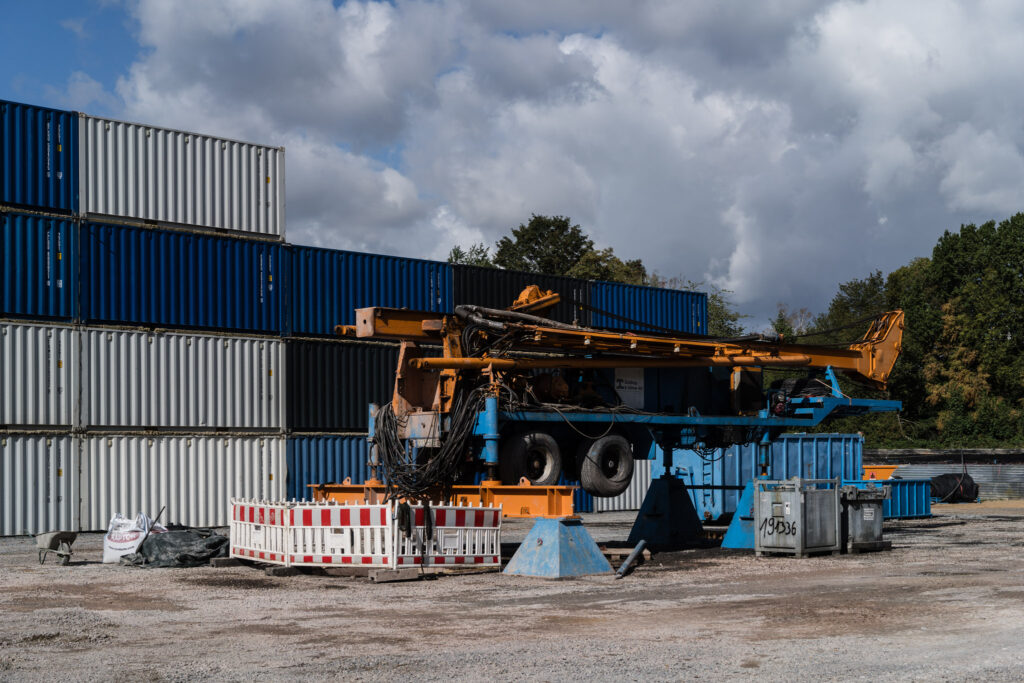
Ende April war das Standrohr soweit fertiggestellt, bis in eine Tiefe von etwas über 40 m zementiert – hier war man auf eine Felsschicht gestoßen – um eine Gefährdung der Grundwasser führenden Schichten durch die Bohrung sicher auszuschließen.
Und weiter ging’s mit den Tiefbauarbeiten, rund um das Standrohr wurde die Baugrube für den Bohrkeller ausgehoben.
Die komplette Serie ist hier zu finden: Gallery > Photography > Köln > Forschungsbohrung Dellbrück
Alle Fotografien mit freundlicher Genehmigung durch den Geologischen Dienst NRW.
Continue reading
Kulturspaziergang Dellbrückentag am 15. Mai. Gerhard Heywang mit Alphorn.

Schon morgen geht sie los, die Jubiläumsausgabe der kulturellen Erkundung in Köln-Dellbrück, Start ist am 15.5. um 15h am Parkplatz Ostfriedhof. Drücken wir die Daumen für gutes Wetter!
Bilder vom letzten Jahr: Gallery > Photography > Köln > Dellbrückentag 2025

Imaged at the IAS Hakos Observatory, Namibia with the 20″ Philipp Keller Cassegrain at full focal length of 4500 mm, f/9, this oddball object is listed both as a galaxy (PGC 49877) and a planetary nebula (Fr 2-8).
Quoting from Planetary Nebulae in the Solar Neighbourhood: Statistics, Distance Scale and Luminosity Function by David John Frew
Fr 2-8 (Fr 1400-5102, AM 1357-504, LEDA 49877). This small nebula, about 2′ across, was found serendipitously from SHASSA field 057, while measuring a Hα flux from the nearby PN MeWe 2-4, and has been confirmed spectroscopically as a high-excitation PN, with the 2.3m MSSSO telescope. The position is coincident with the SIMBAD ‘galaxy’ AM1357-504 (Arp & Madore 1987). It had been independently noted as a PN by Cˆote et al. (1997), but no details were provided in their paper.
Interestingly enough, the team around IAS member Uwe Glahn observed this object visually at Hakos back in 2009.
More details at Astrobin.
Continue reading
Results from the second night at the IAS observatory on the Gamsberg plateau with the 28 inch Newtonian “Wolf-Peter-Hartmann-Teleskop”, adding to my growing catalog of cometary globules.
Alas, sky flats at dusk didn’t work well, so some of the dust struture seen here may be artefacts of the calibration and gradient removal.
More details at Astrobin.
Continue reading
First result from this year’s trip to Namibia, including two nights at the IAS observatory on the Gamsberg plateau using the mighty 28 inch Newtonian telescope for astrophotography. I came across this field of view when observing the supernova SN 2026cff in NGC 3660 with the IAS remote telescope and noticed the near-by, peculiar Hoag-type galaxy PGC1000714 with its ring structure.
More details at Astrobin.
Continue reading